Key takeaways
Mercedes Datacard, BMW SA option codes, Volkswagen Group PR codes, Renault Dialogys, Peugeot Service Box: every manufacturer has its own coding system. The brand-by-brand guide to identify your trim level.

Finding Your Car's Trim Level by Brand: The Manufacturer-by-Manufacturer Guide
Looking for the trim level of your BMW, Mercedes, or Audi? Bad news: there is no universal method for decoding a vehicle. Good news: every manufacturer has its own coding system, documented and accessible—provided you know where to look. Mercedes Datacard, BMW "SA" option codes, Volkswagen Group 3-character PR codes, Dialogys at Renault, Service Box at Peugeot-Citroën: this guide reviews the true identification methods, brand by brand.
Why does every manufacturer use a different coding system?
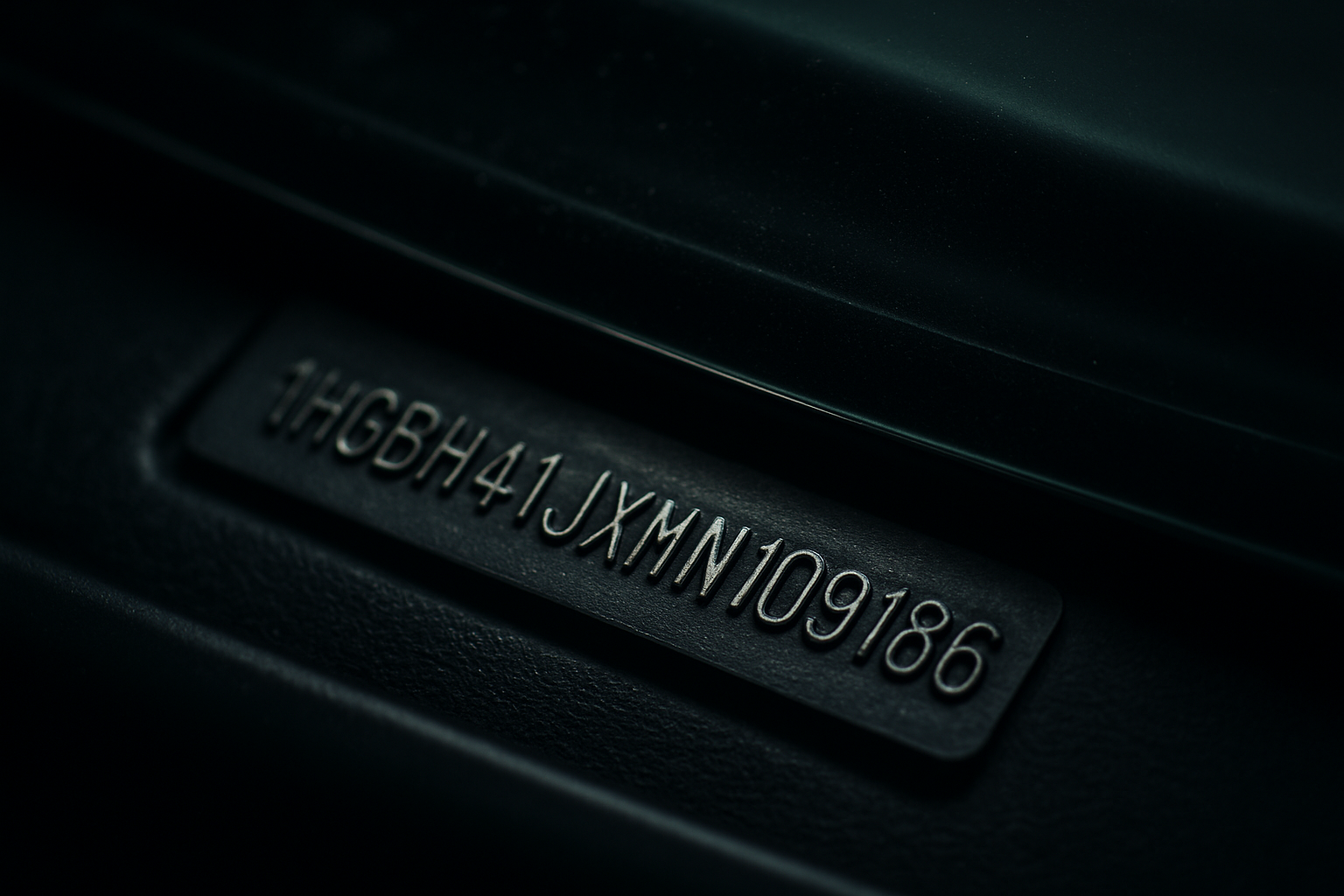
The VIN number is standardized (ISO 3779 standard), but only in its structure: the first three characters identify the manufacturer, and the final block identifies production. Everything else—model, engine, trim level, options—relies on internal coding specific to each brand, developed over decades for the factory and dealership network.
As a result, a single generic decoder cannot translate everything. To get the commercial trim level and the equipment list, you either need access to the brand's documentation or to use a service that directly queries the manufacturer databases—which is exactly what MecaLife does.
BMW and Mini: "SA" Option Codes
At BMW, every option and standard equipment item corresponds to an "SA" code (Sonderausstattung, "special equipment"). These codes—historically 3 digits (S248, S354...), nowadays often 5 characters (S1CAA, S5AUA...)—are recorded in the vehicle order (the "Bestellung") at the time of production.
This order is the source of truth: it lists the trim level, paint color, upholstery, and every factory-fitted option. The BMW network accesses this via its internal systems (ETK, ISTA) using the VIN. For individuals, a few BMW-specialized VIN decoders return the "build sheet," but the simplest route remains an identification report that translates these codes into plain French.
Mercedes-Benz: The Famous "Datacard"
Mercedes likely has the system best known to enthusiasts: the datacard ("Datenkarte"). This is the vehicle's complete identity card, generated at production: order number, factory release date, engine, transmission, paint (3-digit code, for example 197 for Obsidian Black), upholstery—and above all, the list of 3-digit equipment codes.
Each code corresponds to an option or standard equipment item: 233 for the DISTRONIC distance cruise control, 810 for the Burmester audio system, etc. The datacard can be obtained from a Mercedes-Benz service point upon presentation of the VIN, and certain online services specializing in the brand also provide it. This is the reference document for checking a used Mercedes: if the seller advertises an AMG package or air suspension, the datacard settles it.
Audi, Volkswagen, Seat, and Skoda: 3-Character PR Codes
The Volkswagen Group uses a single coding system for all four of its brands: PR codes, which are combinations of 3 alphanumeric characters (for example 8IT, 7X2, or QZ7). Each PR code describes a piece of equipment, an engine, a transmission, or a trim element.
Good news for the owner: these codes are printed on an adhesive sticker delivered with the car, called "Fahrzeugdatenträger" (vehicle data carrier). You will find it in two places:
- pasted inside the original service book;
- pasted in the trunk, generally under the floor, in the spare wheel well.
The sticker also mentions the VIN, engine type, and paint code. All that remains is to match each PR code with the group's nomenclature—a tedious task by hand (there are often 40 to 60 codes per vehicle), but instant with automated decoding.
Renault and Dacia: Dialogys and the Manufacturer Plate
At Renault, identification goes through the Dialogys system, the network's technical documentation and parts catalog. From the VIN (which starts with VF1 for French production), Dialogys returns the vehicle's complete file: regulatory type, engine, commercial trim level, and factory-fitted equipment codes.
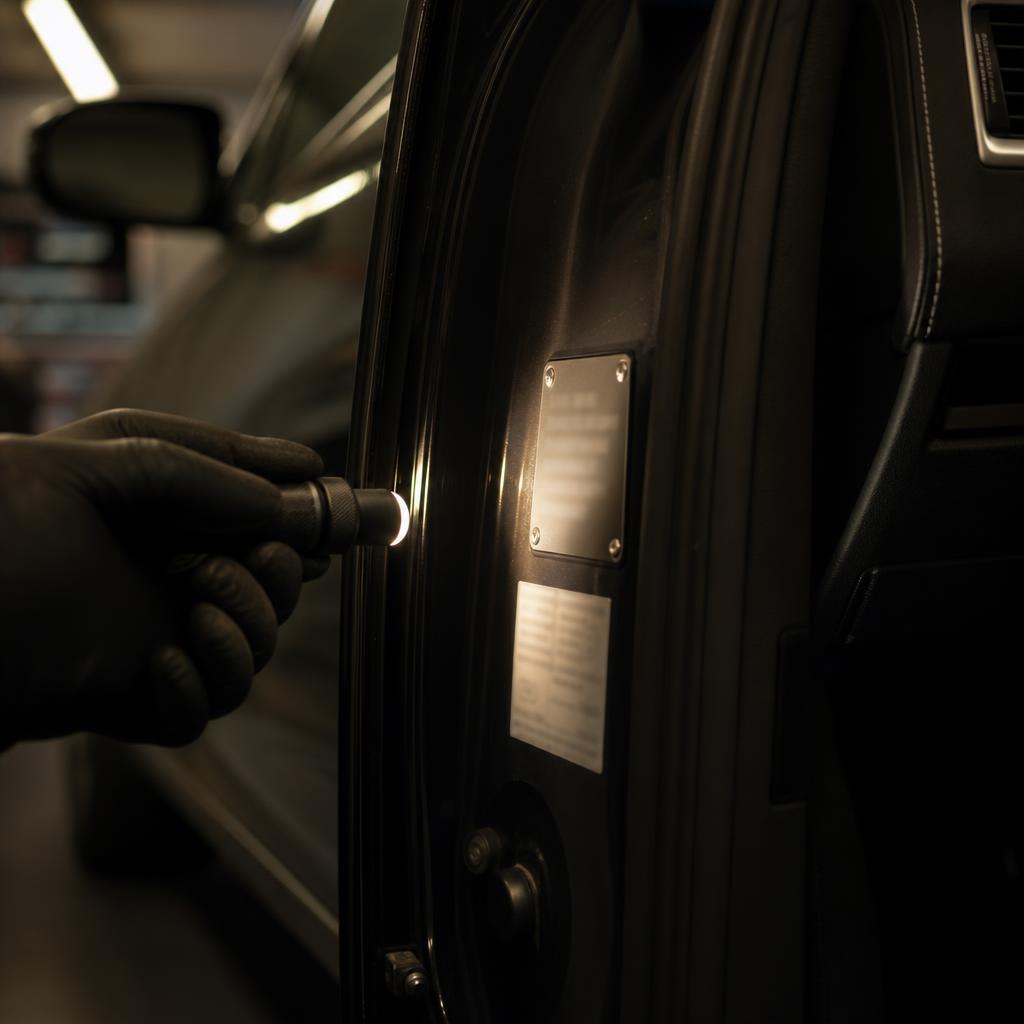
On the car itself, the manufacturer plate—riveted or engraved in a door pillar or under the hood—completes the picture: type approval, paint code, and various manufacturing codes. Renault dealerships can print out the complete sheet from the VIN; failing that, an online identification report retrieves the same information without having to travel.
Peugeot, Citroën, DS, and Opel: Service Box and Production Sheet
The Stellantis group (formerly PSA) provides Service Box, the after-sales documentation portal for the Peugeot, Citroën, DS, and Opel brands. After registration, it allows you to consult the vehicle's characteristics from the VIN (VF3 for Peugeot, VF7 for Citroën): trim level, engine, color, and equipment.
At the dealership, the production sheet (fiche de fabrication) goes further: it is the extract from the production file, listing all ordered options. You will also find the famous OPR number (production organization), which dates the factory exit precisely. To check a used 308 or C4, this is the most reliable reference.
Porsche: The Option Code Sticker
Porsche has a long tradition of transparency regarding equipment: every vehicle leaves the factory with an option code sticker, pasted in the service book and, on many models, under the front hood (in the luggage compartment). These 3-character codes list the transmission, suspension, packages, upholstery, paint...
The Porsche network decodes these elements via its PIWIS system using the VIN (WP0). For older models, Porsche even issues a certificate of authenticity formalizing the original configuration—precious for collectors.
Summary Table
| Brand | Access Method | Coding Name |
|---|---|---|
| BMW / Mini | Vehicle order via network or VIN decoder | "SA" option codes |
| Mercedes-Benz | Datacard via network or specialized services | 3-digit equipment codes |
| Audi / VW / Seat / Skoda | "Fahrzeugdatenträger" sticker (service book + spare wheel) | 3-character PR codes |
| Renault / Dacia | Dialogys (network) and manufacturer plate | Factory equipment codes |
| Peugeot / Citroën / DS / Opel | Service Box and production sheet | Production sheet, OPR number |
| Porsche | Option code sticker (service book + front hood) | 3-character option codes |
The Universal Method: An Identification Report
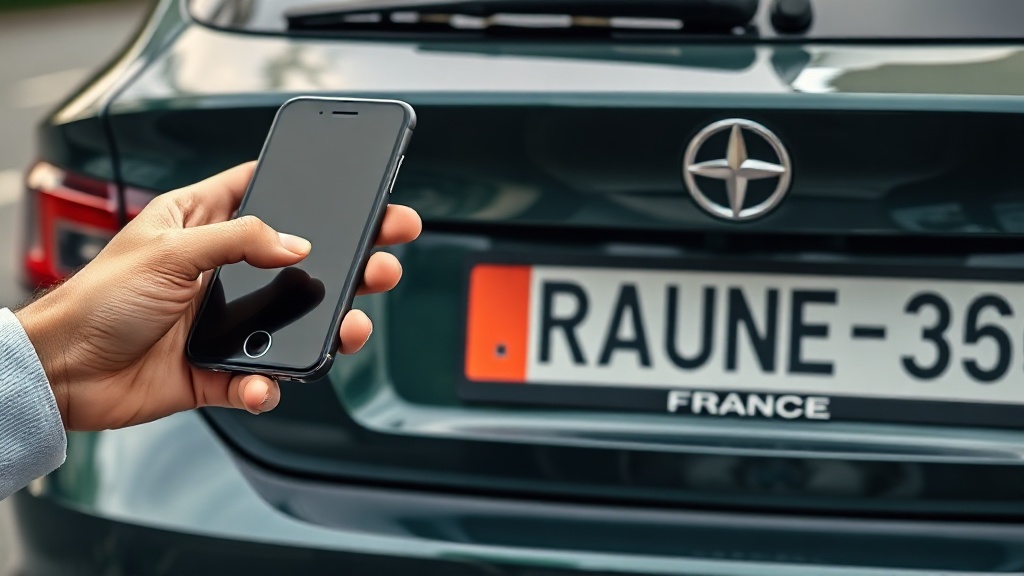
As you will have understood: every brand has its own logic, its own codes, and its own access points. Rather than juggling between a datacard, PR codes, and Dialogys, a MecaLife identification report directly queries manufacturer databases using the VIN—or simply the license plate, as explained in our guide to finding the trim level using the license plate. In a few seconds, you get the exact commercial trim level and the complete list of original options and equipment, regardless of the brand.
It is also the safest method before buying a used car: our pre-purchase inspection checklist explains how to cross-reference the report with a physical examination of the vehicle. And if the car comes from another European country, where trim catalogs differ from one market to the next, the reasoning remains identical—our guides on import methods, checking options on an imported car, and equipment differences between European countries detail these special cases.
Frequently Asked Questions
Are option codes the same from one brand to another?
No. The code "233" means DISTRONIC at Mercedes, but means nothing at Renault. Each manufacturer maintains its own internal nomenclature, inherited from its production systems. Only the VIN structure is standardized internationally—not its detailed decoding.
Where can I find the option code sticker on my car?
It depends on the brand: in the service book and under the trunk floor for Volkswagen, Audi, Seat, and Skoda; under the front hood and in the service book for Porsche. For BMW, Mercedes, and Renault, there is generally no complete accessible sticker: the information is only in the manufacturer's systems, hence the value of connected decoding.
Can I decode my car myself for free?
Partially. Free generic VIN decoders translate the brand, model, and year, but not the commercial trim level or options. Service Box (Peugeot-Citroën) is accessible for free after registration, and the Volkswagen Group PR code sticker can be read on your own if you have the nomenclature at hand. For a complete and clear breakdown, an identification report remains the simplest solution.
Can the dealership provide me with the equipment list?
Yes: upon presentation of the VIN (or the registration document, which lists it in box E), any brand service point can extract the factory file—BMW vehicle order, Mercedes datacard, PSA production sheet... Expect however a trip, sometimes a delay, and a format that depends on the network.
Why does the report's trim level differ from the one advertised by the seller?
Because the report shows the trim level recorded at the factory, not the one from the sales pitch. Badges added after the fact, aftermarket equipment presented as original: only the manufacturer data is authentic. This is an essential reflex before any used purchase.
Does this also work for an imported car?
Yes. Manufacturer databases are common across Europe: a BMW registered in Germany or an Audi registered in Belgium decodes just like a French car. Just be aware that trim levels often have different names depending on the country—the report indicates the labeling of the origin market. Box D.2 of the registration document only gives an approval code, not the trim level.
In Summary
BMW has its SA codes, Mercedes its datacard, the Volkswagen Group its PR codes, Renault Dialogys, Stellantis Service Box, and Porsche its option sticker: every manufacturer speaks its own language. Enter your license plate or VIN on MecaLife and receive the complete translation in seconds—exact trim level and list of original equipment, all brands included.
Additional illustration