Key takeaways
Documents, bodywork, engine, test drive, VIN and options check: all the inspection points to check a used car before buying it, complete with a summary checklist.

Pre-Purchase Used Car Inspection: The Complete Guide (Checklist)
Buying a used car without inspecting it means signing blind. A repainted body, tampered mileage, or a tired engine can turn a good deal into a financial pitfall. Good news: a methodical inspection requires neither professional tools nor mechanic skills—just rigor and a checklist. Here are all the control points to review before taking out your checkbook, from documents to the test drive.
1. The Documents: The Free Inspection That Tells Almost Everything
Even before touching the car, demand to see the paperwork. An honest seller prepares them in advance; a seller who is evasive on this point is already a red flag.
- The registration document (carte grise): Check that the owner's name matches the seller, that the VIN number (section E) matches the one stamped on the vehicle, and note the date of first registration (section B). Section D.2 contains a type-approval code useful for identifying the exact trim level—we explain how to read it in our article on the registration document's section D.2.
- The roadworthiness test (contrôle technique): For a car over 4 years old sold in France, it must be less than 6 months old. Read the defects noted, even minor ones, and beware of a recent re-test passed "in a rush".
- The service booklet and invoices: A tracked history, with regular stamps and invoices consistent with the mileage, is the best indicator of a well-treated car. Mileages that "go down" from one invoice to another = tampered odometer.
- The administrative report (like Histovec in France): It reveals declared accidents, administrative holds, and the status of severely damaged and repaired vehicles.
2. Verify the Vehicle's Identity and Real Options
This is the most overlooked inspection point—and one of the most profitable. A "GT Line full options" ad that turns out to be an entry-level trim means a 2,000 to 4,000 € undue markup.
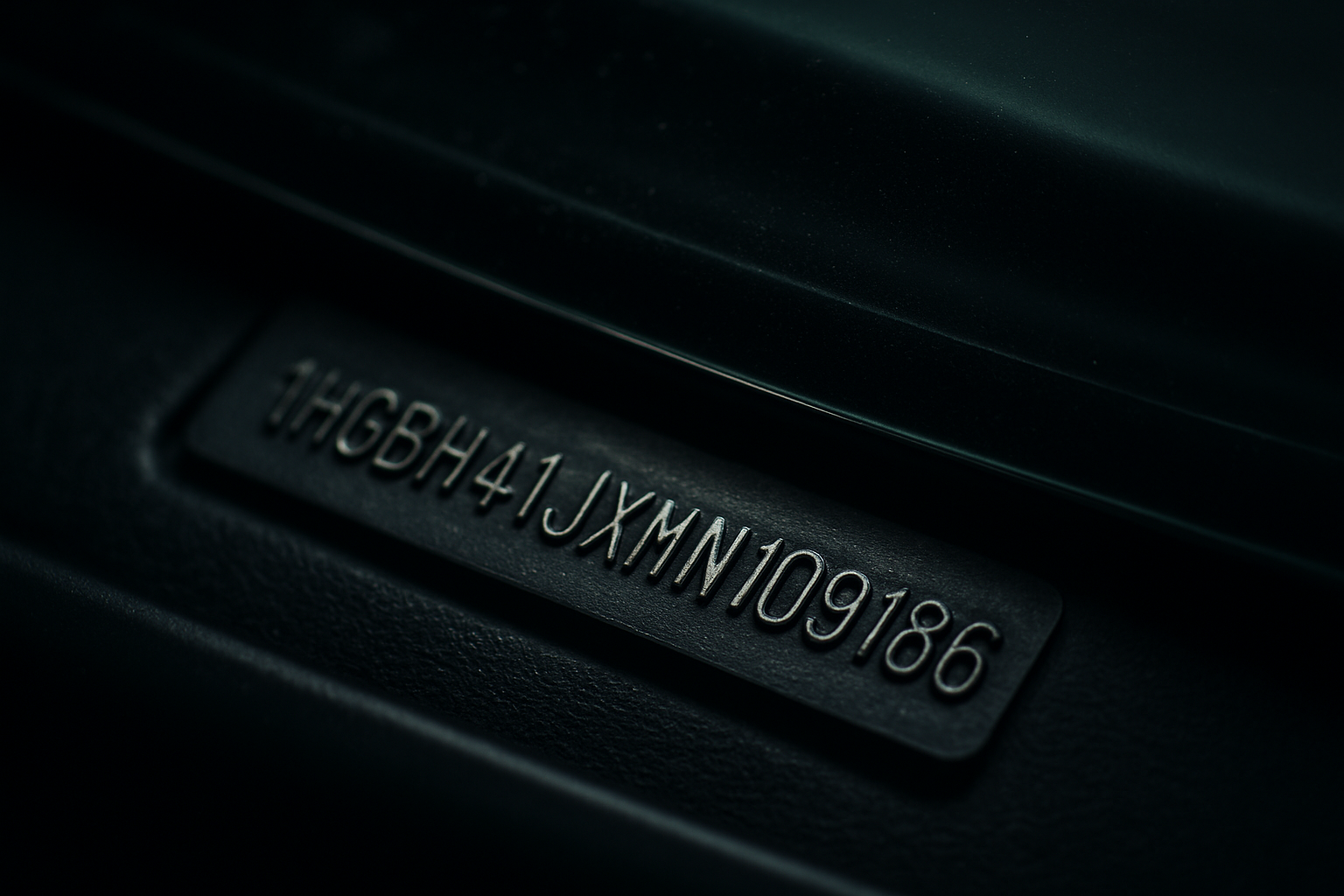
The VIN, that 17-character serial number, contains the complete identity of the car as it left the factory: model, engine, trim level, and list of factory-installed options. Our guide to decoding the VIN and finding the exact trim level details its structure. In practice, the simplest way is to enter the license plate number (or VIN) into an identification report like MecaLife: in a few seconds, you get the exact trim level and the complete list of original equipment with their new price. Our article on how to find the trim level with the license plate compares all methods.
Then compare this report to the ad and the physical car: every advertised option must be present, and every piece of equipment on the report must work. For imported cars, this check is even more important, as standard equipment varies greatly from one country to another—check out our article on verifying the options of an imported car and the one on equipment differences between European countries.
3. The Exterior: Bodywork, Corrosion, and Tires
Inspect the car during the day, in dry conditions, and preferably outdoors. Never in the rain or in a dark garage: water and gloom mask defects.
- Panel gaps: Run your finger along the joints between wings, doors, hood, and tailgate. Irregular or asymmetrical gaps betray disassembly after an accident.
- Paint shades and extra thickness: Look at the car at an angle, against the light. A difference in shade, an "orange peel" effect, or traces of masking tape on the seals indicate a repainted element.
- Corrosion: Sills, wheel arches, bottom of doors, windshield surrounds. A paint bubble often hides perforating rust.
- Tires: Uneven wear (more pronounced on one side) signals a geometry or running gear problem. Check the tread depth (wear indicators at 1.6 mm) and the manufacturing date on the sidewall.
- Windows and lights: A window from a different year than the others (engraved marking) has been replaced—ask why.
4. The Interior: Wear Must Match Mileage
The cabin is the best lie detector on the odometer. A car showing 60,000 km but with a smooth and shiny steering wheel, a sagging driver's seat, worn-down pedals, and frequently used faded buttons has very likely driven much further.
Test all electronics: windows, mirrors, air conditioning (actually cold air), electric and heated seats, multimedia screen, rearview camera, all lighting. An electronic repair can cost several hundred euros. Also check for odors: a persistent damp smell suggests water infiltration, or even a flooded vehicle (look under the mats and in the trunk for traces of mud or rust on the seat rails).
5. Engine and Undercarriage
Engine cold imperatively—demand that the car has not run for several hours. A seller who warms up the car before your arrival may have something to hide (difficult starting, smoke, warning lights).
- Levels and leaks: Oil between min and max, clean coolant. Look under the car and around the cylinder head gasket: traces of fresh oil or brown/foamy liquid under the oil cap are bad signs.
- Cold start: The engine must start instantly, without knocking or whistling. Blue smoke = oil consumption; persistent white smoke = possible blown head gasket; black smoke = injection problem.
- Idle: Stable, without jerks or abnormal vibrations.
- Undercarriage: If possible, look under the front and rear: leaks, corrosion, impact marks on the frame rails or exhaust system.
6. The Test Drive: The Moment of Truth
Never buy without a test drive of at least 20 minutes on varied routes (city, road, expressway if possible). Radio off, windows open then closed.
- Braking: Brake firmly in a straight line (on a clear road): the car should pull neither left nor right, with no vibrations in the pedal or metallic noises.
- Steering: Released briefly on a flat road, the car must keep its trajectory. Play in the steering, cracking when turning fully = tired ball joints or silentblocks.
- Gearbox: Every gear must shift smoothly without snagging or cracking; in automatic, shifts must be smooth, without jerks or delayed engagement.
- Clutch: The bite point very high (pedal almost released) announces a clutch at the end of its life—500 to 1,200 € depending on the model.
- Behavior: Suspension noises over speed bumps, abnormal turbo whistle, warning lights turning on: everything is noted down for negotiation.
7. Red Flags That Should Make You Walk Away
Some defects are negotiable, others are to be fled. Walk away if you notice:
- documentary inconsistencies (different VIN between registration and vehicle, inconsistent mileage, doubtful roadworthiness test);
- traces of structural accident (bent or repainted frame rails, non-original welds);
- persistent smoke, a lit engine warning light, or an engine that does not start cold properly;
- a seller who refuses the test drive, inspection, or handover of documents;
- unusual pressure to "decide right away" or an abnormally low price without explanation.
In case of serious doubt, get a professional inspection: for 100 to 200 €, an independent expert or specialized network combs through the vehicle (often 100 control points) and delivers a written report. It's a small price to pay for a purchase worth several thousand euros.
The Summary Checklist to Take With You
- Registration document compliant (holder, VIN, registration date)
- Roadworthiness test less than 6 months old, defects read
- Service booklet and invoices consistent with mileage
- Administrative report consulted (accidents, holds)
- Real trim level and options verified via VIN or license plate
- Panel gaps and paint inspected in daylight
- Corrosion: sills, wheel arches, bottom of doors
- Tires: even wear, indicators, manufacturing date
- Interior wear consistent with displayed mileage
- All electronics tested (AC, windows, screen, seats)
- Cold start without noise or abnormal smoke
- No visible leaks under the vehicle
- Test drive: straight braking, healthy steering, smooth gearbox, correct clutch
- No prohibitive red flags detected
Frequently Asked Questions
Can you inspect a used car yourself without being a mechanic?
Yes, for the most part. Document checks, visual inspections, and the test drive allow you to detect the vast majority of problems. On the other hand, if the car really interests you and represents a substantial budget, a professional inspection remains a wise investment.
How do you know if the mileage has been tampered with?
Cross-reference three sources: the service booklet and invoices (successive mileages), the roadworthiness test history (available on the administrative report), and the physical wear of the cabin. Any inconsistency between these sources is suspicious.
Should you check the trim level and options before buying?
Absolutely. The trim level and options determine a large part of the value: two identical-looking cars can differ by several thousand euros. An identification report by license plate or VIN gives you the exact trim level and the list of original equipment in a few seconds—a factual argument to negotiate or walk away.
Is a recent roadworthiness test enough to guarantee the car?
No. The roadworthiness test checks safety and pollution, not reliability or history: it says nothing about real mileage, options, unrepaired structural accidents, or clutch wear. It is a necessary check, never sufficient.
What if the seller refuses the test drive or inspection?
Leave. A seller—private or professional—who refuses a test drive, document review, or independent inspection has something to hide. There is always another car.
Does an imported car require additional checks?
Yes. Check the history in the country of origin as much as possible, and especially the trim level and real equipment: equipment levels vary a lot from one market to another and ads are often optimistic. Our guides on importing a car from Europe and on checking the options of an imported vehicle detail these points.
In Summary
A serious inspection always follows the same order: documents, vehicle identity, exterior, interior, mechanics, test drive. Count on an hour on-site, and don't be afraid to talk numbers for every defect found—that's the price of negotiation. First step, even before traveling: check the exact trim level and original options of the car by entering its license plate on MecaLife. You will immediately know if the ad matches reality.

Additional illustration