Key takeaways
In June 2020, the PDLV blog analyzed 10 "fully loaded" listings using MecaVIN reports: none of them were. Golf 6: 3 options out of 24, Grand Picasso: 1 out of 13, Audi A1: 10 out of 87.

"Fully loaded": two little words that drive up the price of a listing by several hundred euros. But does a "fully loaded" car actually exist? In June 2020, the automotive blog PDLV (Permis De La Voiture) wanted to check this with hard numbers, in a study conducted in partnership with MecaVIN: ten used car listings advertised as "fully loaded" were put to the test using identification reports. The verdict: not a single one actually was. A look back at a study that should be bookmarked by every used car buyer.
The PDLV study: 10 "fully loaded" listings put to the test
The premise of the study published by PDLV is deceptively simple. The blog team selected ten used car listings where the seller claimed—in writing—that the vehicle was "fully loaded". For each one, they ordered a MecaVIN identification report: the document that retrieves the exact configuration of the vehicle as it left the factory, including original trim and options, based on its manufacturer identifier.
All that was left to do was to compare, line by line, the claims in the listing with the factory reality. No room for interpretation: an option is present or it isn't.
The verdict: zero cars actually "fully loaded"
Out of the ten vehicles analyzed, none were equipped with all the options available in the catalog. Worse still: some were a far cry from it, and the gap between the promise and reality sometimes reached absurd levels. Four examples illustrate this phenomenon particularly well:
- Volkswagen Golf 6: presented as "fully loaded", it actually had only 3 options out of the 24 offered by the manufacturer. Sunroof, leather, navigation, heated seats, park assist... all these paid features were missing, even though the "fully loaded" claim justified a higher price.
- Porsche Cayenne: the most caricatural case in the study. The MecaVIN report revealed purely invented options—features mentioned in the listing that simply did not exist in the vehicle's configuration. In the premium segment, where each option costs several hundred or even thousands of euros, this type of discrepancy represents a considerable loss for the buyer.
- Citroën Grand C4 Picasso: advertised as "fully loaded", it actually featured only 1 out of 13. A family MPV sold on a virtually empty promise.
- Audi A1: the top of the class... which is not a compliment. With 10 options out of 87 available, even the best-equipped car in the study was light-years away from a "fully loaded" configuration.
The message is crystal clear: in this market, the phrase "fully loaded" is more of a sales pitch than a technical fact.
Why "fully loaded" means almost nothing
How do we end up with such a mismatch? Three mechanisms combine.
The confusion between trim level and options. A seller—whether private or professional—frequently confuses "high-end trim level" and "fully loaded". A Golf with the Carat trim or an A1 in S line is well-equipped as standard, but that does not mean it has the paid options checked off at the factory: this is precisely the difference between standard equipment and the options list. Our article on differences in standard equipment across European countries also shows that this confusion worsens even further with imports, where catalogs vary from one market to another.
The vagueness of manufacturer catalogs. For certain brands, the same model year can offer dozens of options, sometimes grouped into packages. Without the period catalog in front of them, no seller can seriously guarantee that "everything" is included.
The sales incentive. "Fully loaded" reassures, attracts clicks, and justifies a price. As long as the buyer doesn't check, the phrase costs nothing to the person using it—and that is exactly what the PDLV study brought to light.
How to know if a car really has all its options
The good news from this study is that it also demonstrates the solution: verification via an identification report is quick, objective, and accessible to everyone. Concretely:
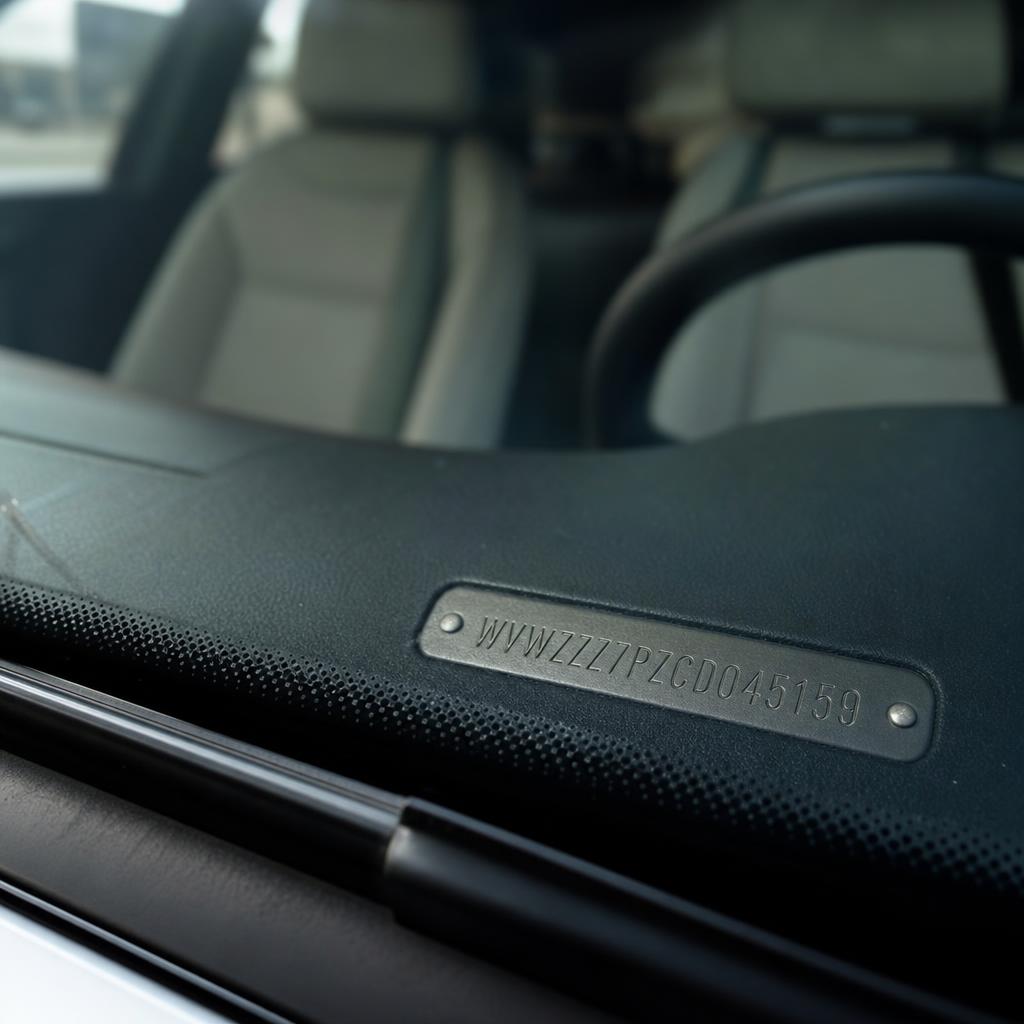
- Retrieve the registration or the VIN of the vehicle (the VIN is on the registration document, box E, and on the door pillar or windshield).
- Run an identification report: it retrieves the exact trim level registered at the factory and the list of original options, regardless of what the listing claims.
- Compare with the listing and the model-year catalog: options advertised but missing from the report are so many negotiation arguments—or grounds for walking away.
This is the approach we detail step-by-step in our guide on how to check the options and actual trim level of an imported car, which is particularly useful when the trim level has a foreign name unknown in France. And if you are still hesitating, our method for decoding the VIN and finding the exact trim level of a vehicle explains where to find this identifier and how to interpret it.
What the study practically changes for the buyer
Beyond the anecdote, this investigation has very practical consequences for your next purchase:
- On price: a factory option genuinely adds value to a vehicle at resale. If half of the advertised options do not exist, the fair price is not the one in the listing. The report becomes a quantified negotiation argument.
- On inspection: the list of original options also guides the physical examination—equipment present in the factory catalog but missing on the car can signal a post-accident replacement. Systematically cross-reference the report with a comprehensive used car inspection before purchase.
- On trust: a seller who inflates the equipment list may be negligent on other points—maintenance, history, mileage. Checking the options acts as a reliability detector.
Frequently asked questions
How to know if a car really has all its options?
The only reliable method is to compare the listing with the vehicle's factory configuration. Using the VIN or registration, a MecaVIN identification report lists the exact trim level and options installed at the factory. As the PDLV study shows, the seller's word—even in good faith—is not enough: out of 10 "fully loaded" listings, not a single car actually was.
What does "full options" or "fully loaded" really mean in a listing?
In practice, the seller usually means "high-end trim level, well-equipped". It is a marketing phrase with no technical definition: most models offer dozens of paid options in addition to standard equipment, and almost no vehicle combines them all. Rely only on what appears on an objective document.
Does a truly fully loaded car exist?
It is extremely rare. This assumes that a first customer checked off the entire options catalog when ordering the vehicle new—a configuration mostly found on demonstration or press cars. The PDLV study, out of ten listings specifically selected for their "fully loaded" promise, found none.
Do original options influence resale price?
Yes, and sometimes strongly: sunroof, leather upholstery, driver assistance, factory towbar, or winter pack all command a price on the used market. But this valuation assumes the option is actually present—hence the importance of having it appear on an identification report rather than in the text of a listing.
Is the PDLV study still relevant today?
Published in June 2020, it is more relevant than ever: the mechanics of listings have not changed, and the proliferation of packages and options by manufacturers makes confusion even easier. Its conclusion remains the golden rule of used car buying: don't trust the label, verify the factory configuration.
In summary
The PDLV study demonstrated, with MecaVIN reports to back it up, that the mention "fully loaded" is at best a shortcut, at worst a misleading argument: a Golf 6 with 3 options out of 24, a Grand Picasso with 1 out of 13, an Audi A1 with 10 out of 87, and even a Cayenne equipped with invented options. The lesson can be summed up in one sentence: before paying the "fully loaded" price, check what the factory actually installed. Enter the registration or VIN of the coveted vehicle on MecaVIN and get the exact list of its trim level and original options in just a few minutes—the only "option" that never deceives.
Additional illustration