Key takeaways
Section D.2 of the vehicle registration document contains a type approval code, not your trim level name. What it actually means, its limitations, and reliable alternatives.
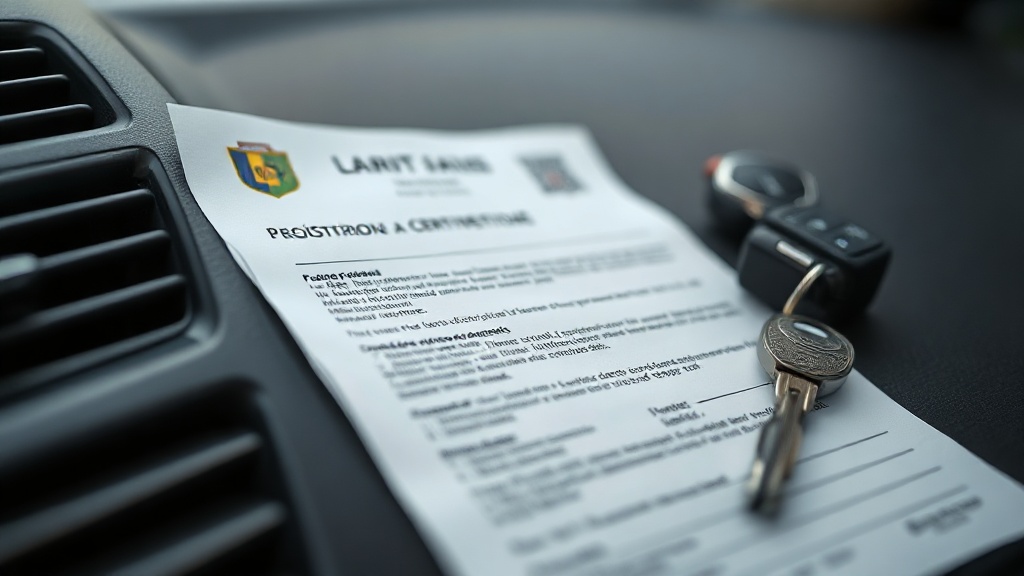
When looking for your car's trim level, the first instinct is to open the registration document (carte grise). You will indeed find a mysterious box there, D.2, supposed to describe the vehicle's "version". But what does it actually contain, and is it enough to identify your trim level? A complete overview, including its limitations and reliable alternatives.
Where is box D.2 located on the vehicle registration document?
On the French registration certificate (European format), box D.2 is located in the upper right part of the front side, just below box D.1 (vehicle make). It is part of the "D" block reserved for the vehicle's description:
- D.1: the make (RENAULT, VOLKSWAGEN…)
- D.2: the type, variant, and version — in coded form
- D.2.1: the national type identification code (CNIT), sometimes filled in
- D.3: the commercial description of the model (for example "CLIO")
What does box D.2 actually contain?
Contrary to popular belief, box D.2 does not display the commercial name of the trim level (Allure, Business, Intens, GT Line…). It contains a technical homologation code assigned during the European type approval of the vehicle, for example 5G0ABC or VF30ABC12345678.
This code allows administrations and automotive professionals to find:
- the technical variant of the model (bodywork, engine, transmission);
- the corresponding homologated version.
It is precise, but completely unreadable for an individual without access to manufacturer databases or a decoding tool.
Is box D.2 enough to know your trim level?
No, in most cases. Three major limitations:
- No commercial name: nothing says "this car is a 308 Allure".
- No options: factory-fitted optional equipment (panoramic roof, winter pack, leather upholstery) does not appear anywhere on the registration document — even though they often represent thousands of euros in value.
- Intermediate variants: phases 1 and 2 of the same model, special series, packs… are impossible to distinguish without decoding the code.
Box D.3 (commercial description) helps a little — it sometimes specifies the model variant — but remains silent on the trim level.
How to go further than box D.2?
Decoding the D.2 code with the VIN
Box E of the registration document contains the VIN, the vehicle's unique identification number. When cross-referenced with the manufacturer's database, this is what allows the exact commercial trim level and original equipment to be retrieved. Our detailed guide explains how to decode the VIN to find the exact trim level.
Using an online identification report
The easiest solution: enter your license plate (or VIN) on MecaLife. In a few seconds, the report retrieves the exact trim level as registered at the factory, the complete list of options with their new-car price, and the technical specifications — right where the registration document stops at the D.2 code.
Asking the manufacturer
A dealership can check the vehicle's factory file using the VIN. Reliable, but this requires a visit or a formal request, with delays and sometimes fees.
Frequently asked questions
Is box D.2 mandatory?
Yes, it appears on all registration certificates in the European format. However, it may be partially filled in on older or imported vehicles.
What is the difference between D.2 and D.2.1?
D.2 is the European type/variant/version code. D.2.1 is the CNIT, the French national code that identifies the vehicle type in the national database. Both refer to the same technical reality under two different reference systems.
Why does my insurer ask me for the trim level when I gave the registration number?
Because the registration document is not enough for pricing: the insurer wants the exact equipment level, which influences the vehicle's replacement value. They decode the D.2 code themselves via their own databases — you can do the same with an identification report.
Does the trim level really influence the resale price?
Yes, significantly. For the same model and mileage, the gap between an entry-level trim and a high-end trim can reach 10 to 20% of the vehicle's value, not to mention options.
In summary
Box D.2 is a useful but insufficient starting point: it gives a technical code, not your trim level. To get the exact commercial name and the list of original equipment, you need to decode the VIN — the quickest way being a license plate identification report on MecaLife.

Additional illustration