Key takeaways
Buying a Porsche is a dream, but watch out for the pitfalls! Discover how to check the history, hidden options, and reliability of your future German sports car through VIN decoding and our expert advice.
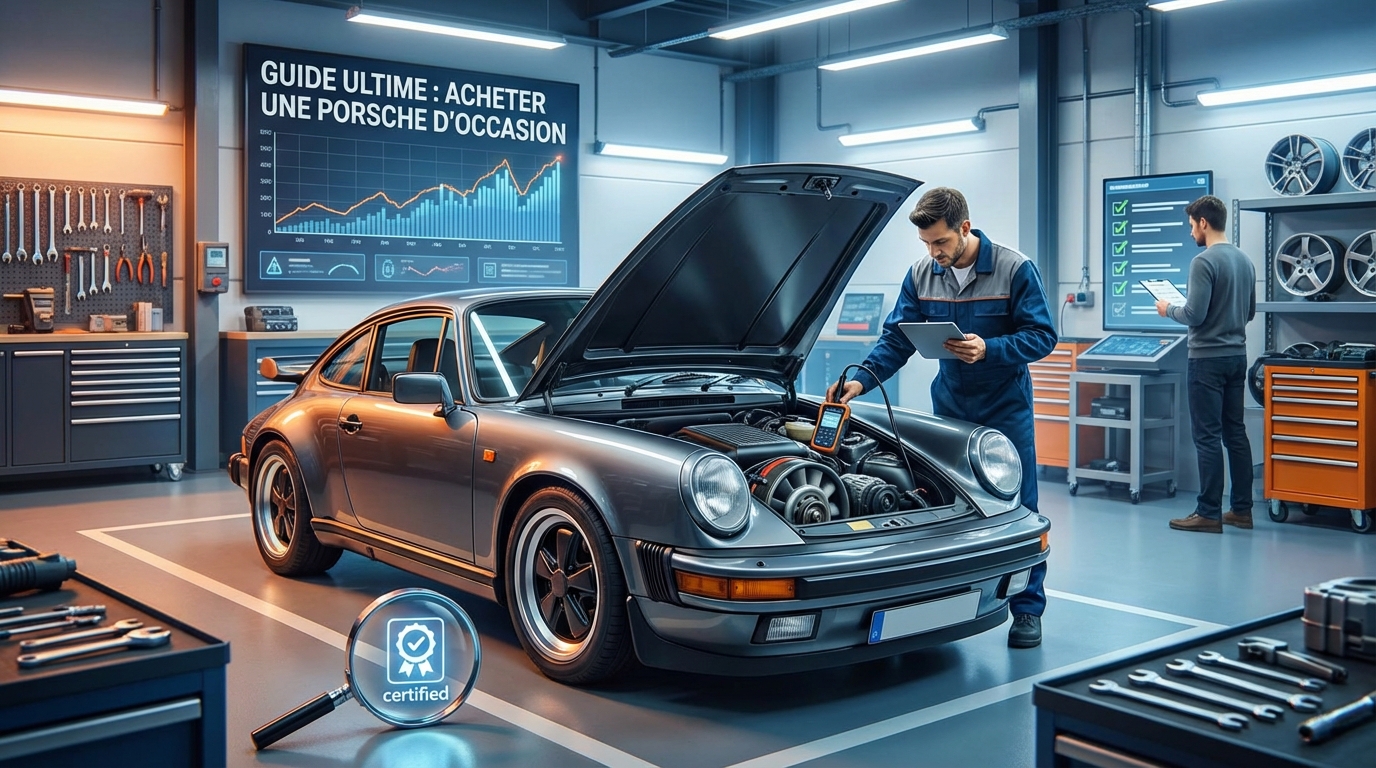
Owning a Porsche is often the fulfillment of an automotive dream. Whether it's the timeless lines of a 911, the perfect balance of a Cayman, or the luxurious versatility of a Cayenne, the Stuttgart brand embodies mechanical excellence and prestige. However, the used Porsche market is a jungle where euphoria can quickly turn into astronomical repair bills if you aren't careful.
There is a well-known adage in the enthusiast world: "There is nothing more expensive than a cheap Porsche."
In this comprehensive article, we will break down everything you need to know before signing the cashier's check. From the crucial importance of options (often excessive and hidden) to verifying the history via the VIN, MecaLife is here to help you turn your dream into reality, without the mechanical nightmare.
1. Understanding the Porsche Market: More Than a Brand, A Religion
Before diving into the technical aspects, it is essential to understand Porsche's philosophy. Unlike other generalist manufacturers, Porsche operates on a principle of constant evolution rather than revolution. This means that two models that look identical aesthetically can have radically different market values and reliability.
The Model Hierarchy
The used car market is generally divided into three major categories:
- The Iconic Sports Cars (911): This is the heart of the brand. Since 1963, the 911 has gone through numerous generations (Classic, 964, 993, 996, 997, 991, 992). Each generation has its specificities, fans, and critics.
- The Mid-Engine Cars (Boxster and Cayman): Often mistakenly called "baby Porsches," they are actually formidable driving machines thanks to their balance. The 986, 987, 981, and 718 models offer a fantastic entry point into the brand's universe.
- The Family Cars (Cayenne, Macan, Panamera): These models saved Porsche from bankruptcy. They are very abundant on the used market, but beware: a Cayenne bought for €15,000 remains a luxury vehicle whose maintenance costs the price of a new car.
2. The Labyrinth of Options: Why the VIN is Essential
This is where the majority of uninformed buyers get trapped. At Porsche, the options list is literally endless. Unlike a Japanese brand where a "High-end" trim includes everything, a "base" Porsche can be very stripped down.
Two Porsche 911 Carrera Ss from the same year, with the same mileage and color, can have a price difference of €10,000 to €15,000 based solely on their equipped options.
"Deal-Breaker" Options (Essential for Resale)
If you are buying a sports car (911/Boxster/Cayman), the absence of certain options can make the car very difficult to resell:
- PSE (Porsche Sport Exhaust): The switchable sports exhaust. Recognizable by the "dual outlet" button on the center console or by the specific tailpipes. It transforms the engine's sound.
- Sport Chrono Package: Identifiable by the stopwatch on the dashboard. It offers more aggressive driving modes (Sport Plus) and, on automatic transmissions, much sportier gear-shifting management.
- PASM (Porsche Active Suspension Management): Active suspension that stiffens or softens the damping.
- Sport Seats or Bucket Seats: Base seats are comfortable, but sport seats (often called "14-way" or "18-way") are much more desirable.
How to Know if the Car Really Has These Options
Sellers are sometimes optimistic or ignorant. They might list "Sport Exhaust" when it's actually a standard exhaust modified by a third party, which does not hold the same value.
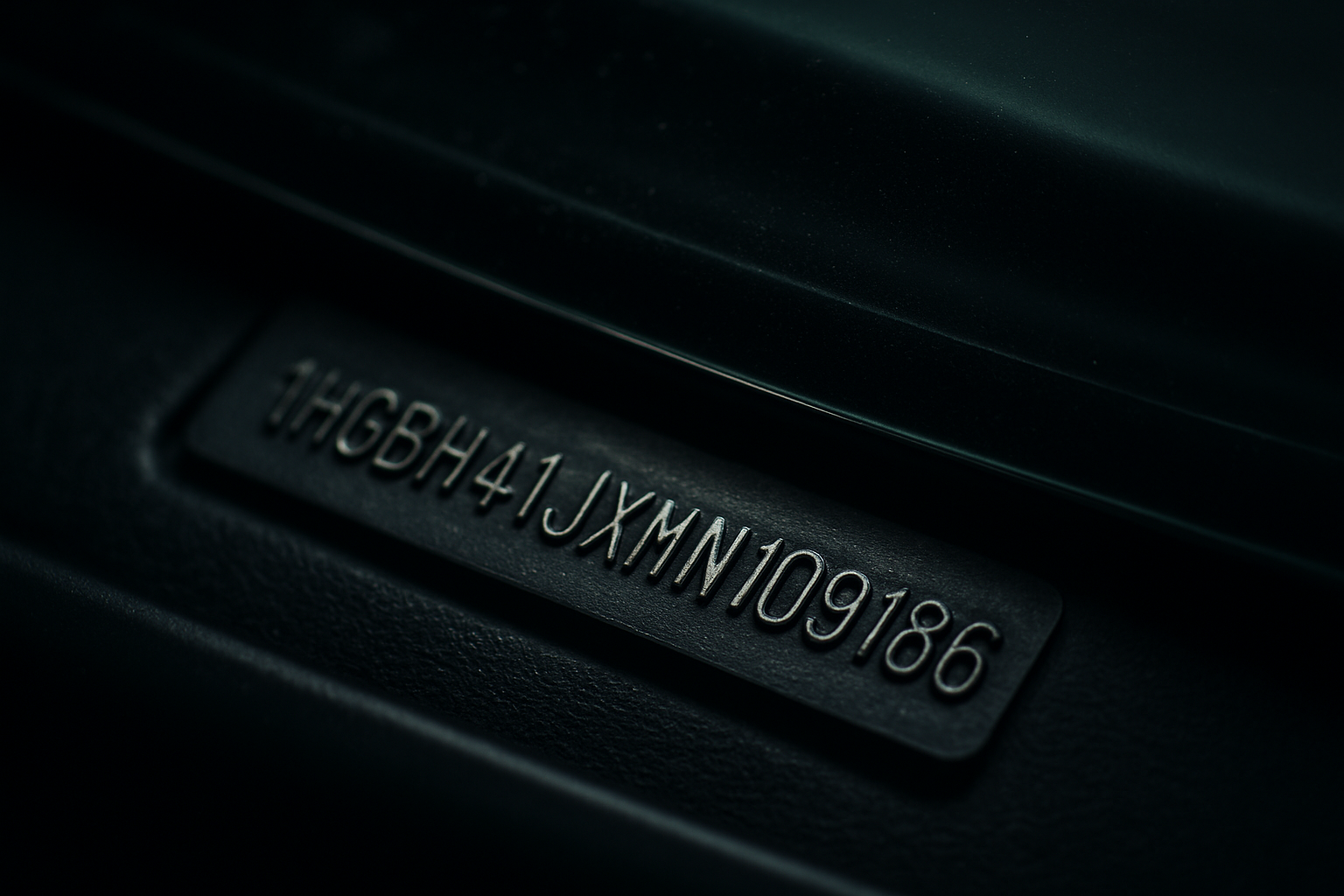
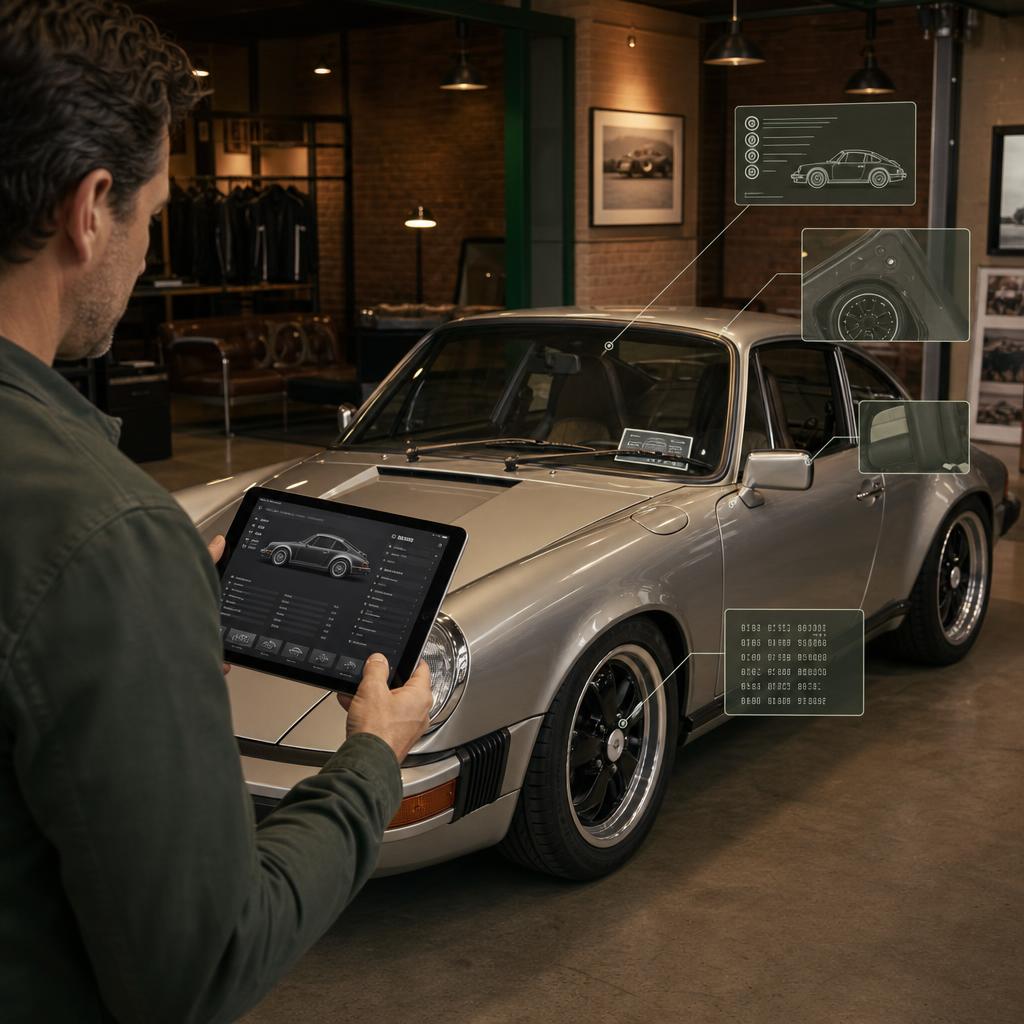
This is where MecaLife steps in. Thanks to our VIN (Vehicle Identification Number) and license plate decoding tool, you can access the factory equipment list. By entering the chassis number on MecaLife, you will know exactly how the car left the Stuttgart or Leipzig factory. You can check whether the "Chrono Package" is original or if it was added later (which is technically complex and rare).
3. Reliability and Points of Vigilance by Model
Although Porsche is regularly ranked among the most reliable brands in the world, certain generations experienced major design flaws that you absolutely must know about.
The Infamous IMS Bearing (1997-2008)
This is the nightmare of 911 (996 and early 997) and Boxster/Cayman (986 and 987 phase 1) owners. The Intermediate Shaft (IMS) bearing can fail without warning, leading to the total destruction of the engine.
- The MecaLife advice: If you are targeting these models, check via the service records if the bearing has been upgraded (replaced with a ceramic or reinforced model). If not, negotiate the price accordingly.
Bore Scoring
This phenomenon primarily affects the naturally aspirated engines of the phase 1 997s and certain Cayman Ss. The cylinder walls get scratched, causing excessive oil consumption and engine knocking (ticking noise when cold).
PDK vs. Tiptronic Transmission
- Tiptronic (before 2008): Torque converter automatic transmission. Robust, but slow and not very sporty.
- PDK (after 2008): Dual-clutch transmission. Fast, reliable, and sporty. This is the current standard. Make sure the PDK transmission has been serviced according to recommendations (usually every 6 years or 90,000 km / 55,000 miles), as replacing a PDK transmission costs over €10,000.
The Specific Case of Hybrids (Cayenne / Panamera)
E-Hybrid models are very attractive tax-wise. However, check the condition of the high-voltage battery. On models older than 8-10 years, electric range can drop drastically, and cell replacement is expensive.
4. Vehicle History: The Ultimate Judge
A Porsche with a spotless history will always be worth more than a car with a vague past, even if the latter looks cleaner aesthetically.
German Imports
It is very common to find Porsches imported from Germany into France. This is not a problem in itself (it's their birthplace!), but it makes odometer fraud easier.
How to secure an imported purchase?
- Demand the complete service book: Stamps must follow each other logically.
- Use MecaLife: Our history report can track mileage records from previous technical inspections or workshop visits, even abroad. This immediately flags any inconsistencies (e.g., a car that had 150,000 km in 2018 and has 80,000 today).
- The PIWIS Test: If you have any doubts, request a Porsche diagnostic scan (PIWIS). It reads the "rev ranges." If the engine was pushed too high in the revs (overspeed/over-rev), it is permanently recorded in the computer. A high number of over-revs in the upper ranges can void the Porsche Approved warranty and indicates aggressive driving.
5. Hidden Costs to Anticipate
Buying the car is one thing; maintaining it is another. Here are some costs to keep in mind when establishing your budget:
- Brakes: If the car is equipped with ceramic brakes (PCCB option, yellow calipers), braking is inexhaustible on the track. But beware: replacing the discs and pads can cost between €15,000 and €20,000. Double-check this option via the VIN on MecaLife. For road use, steel brakes (red or black calipers) are more than enough and much cheaper (around €1,500 - €2,000).
- The Porsche Approved Warranty: This is the Holy Grail. A used car sold with this warranty (or eligible for it) means it has passed a 111-point inspection. You can subscribe to this warranty up to the car's 15th birthday (under certain conditions). It is a major peace-of-mind insurance.
- Tires: Porsches are homologated with specific tires marked "N" (N0, N1, N2...). It is crucial to respect this homologation for road handling and insurance purposes. Budget €1,000 to €1,500 for a complete set of tires.
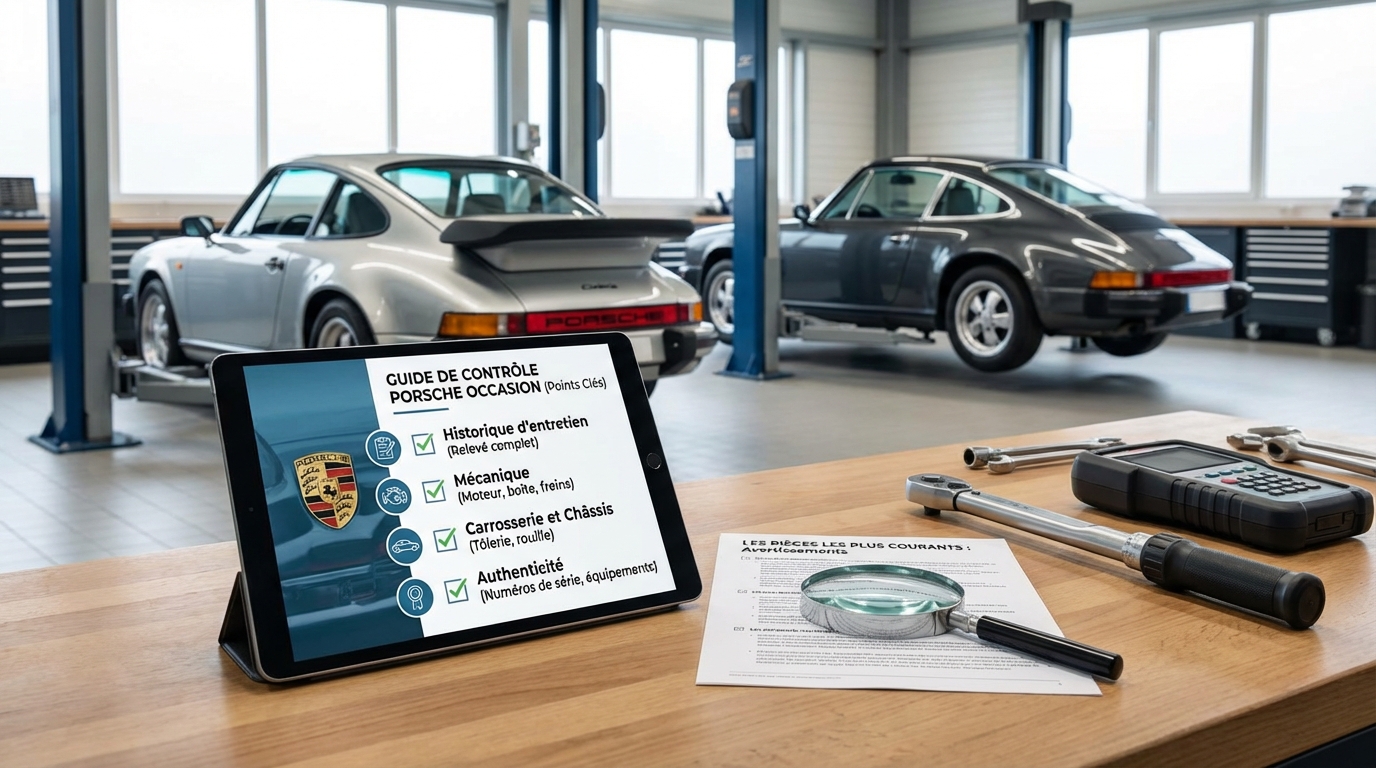
6. The Savvy Buyer's Checklist
Before you travel to see a Porsche, follow these steps to save time and money:
- Ask the seller for the VIN. If they refuse, walk away.
- Enter the VIN on MecaLife.
- Verify that the model matches exactly (Model year, engine type).
- Download the options list to verify the presence of critical equipment (Sport Chrono, PSE, Sunroof, etc.).
- Analyze the administrative history (Liens, theft records, past accidents).
- Analyze the photos. Zoom in on bumper alignments, the condition of the leather (the driver's seat bolster is often worn), and the wheels (scuff marks may indicate a careless owner).
- During the test drive:
- The engine must be cold at startup (touch the hood). A seller who warmed up the car before your arrival might be trying to mask cold-start noises or smoke.
- Test all electrical options.
- On the road, the car should track straight. Braking should be sharp without vibrations.
Conclusion: Information is Power
Buying a Porsche is an intense emotional experience. It is the purchase of a mechanical work of art. But do not let emotion blind your rational judgment.
A well-bought Porsche with the right history and the right options is a car that will depreciate very little, or even gain value for certain models (like 911 GT3s or specific limited editions).
To succeed in this passion investment, the most powerful tool at your disposal is not a wrench, but information. Use MecaLife to decode the DNA of your future Porsche. Knowing its exact factory configuration and administrative past will give you the confidence needed to buy with complete peace of mind.
Ready to take the plunge? Grab the license plate number or VIN of the desired Porsche and run a search right now on MecaLife.com to access its detailed report.
Additional illustration
To go further